

The phone rings late at night. It is your granddaughter, and she is crying. She says she is in trouble, she needs money right now, and please do not tell anyone. The voice sounds exactly like her. Every bit of it.
Here is the hard part to hear. That voice may not be your granddaughter at all. Scammers can now copy a real person's voice using a short clip pulled off the internet, and they use it to call families like yours and ask for money in a panic.
The good news is that one simple move stops this scam cold, and anyone can do it. Let me walk you through exactly what is happening and what to do.
🔍 What is the AI voice scam?
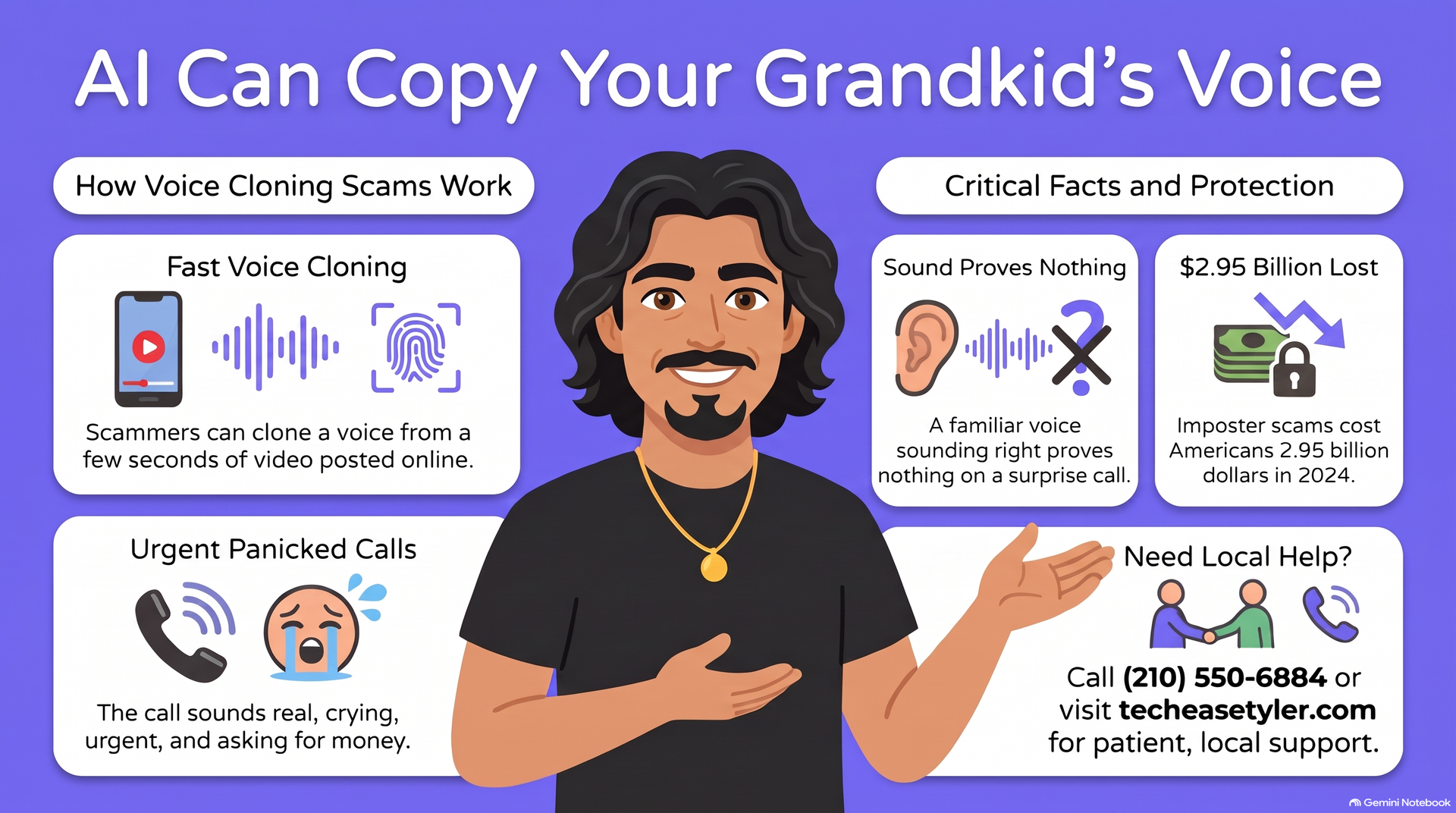
It is a new twist on an old trick called the family emergency scam. A criminal calls pretending to be your child, grandchild, or another loved one in trouble, then begs for money fast. What is new is the voice. Using cheap artificial intelligence tools, a scammer only needs a few seconds of someone's real voice to fake it. That clip can come from a video posted on Facebook, a voicemail, or a TikTok.
The Federal Trade Commission, the government agency that protects consumers, put it plainly in a public alert, all a scammer needs is a short audio clip of your family member to copy how they sound. Then a voice-cloning program does the rest.
This is not a rare problem. In 2024, Americans reported losing 2.95 billion dollars to imposter scams, the most of any scam category the FTC tracks. Family emergency calls are part of that wave.
🚨 Why it is so convincing
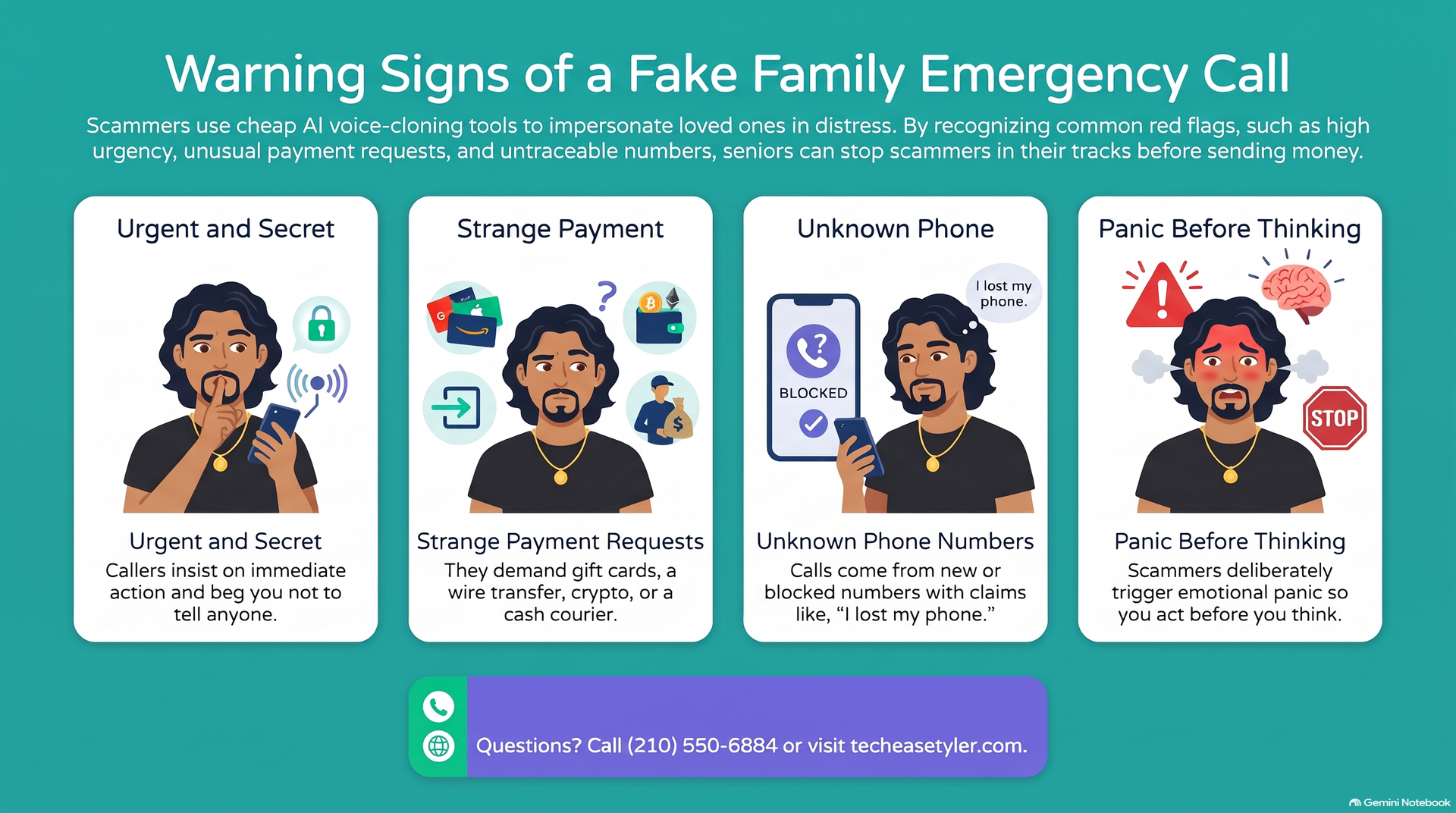
These calls work because they hit you in the heart before your head can catch up. Watch for these warning signs. Any one of them means stop and check.
They push you to act this minute and beg you not to tell another family member. Real emergencies do not need secrecy from the people who love you.
Gift cards, a wire transfer, cryptocurrency, or a courier coming to your door for cash. These are hard to trace and nearly impossible to get back. No real hospital or lawyer asks for gift cards.
They say they lost their phone or are calling from the police station, so it is a number you do not recognize. That is on purpose, so you cannot tell it is not really them.
✅ The one move that stops it
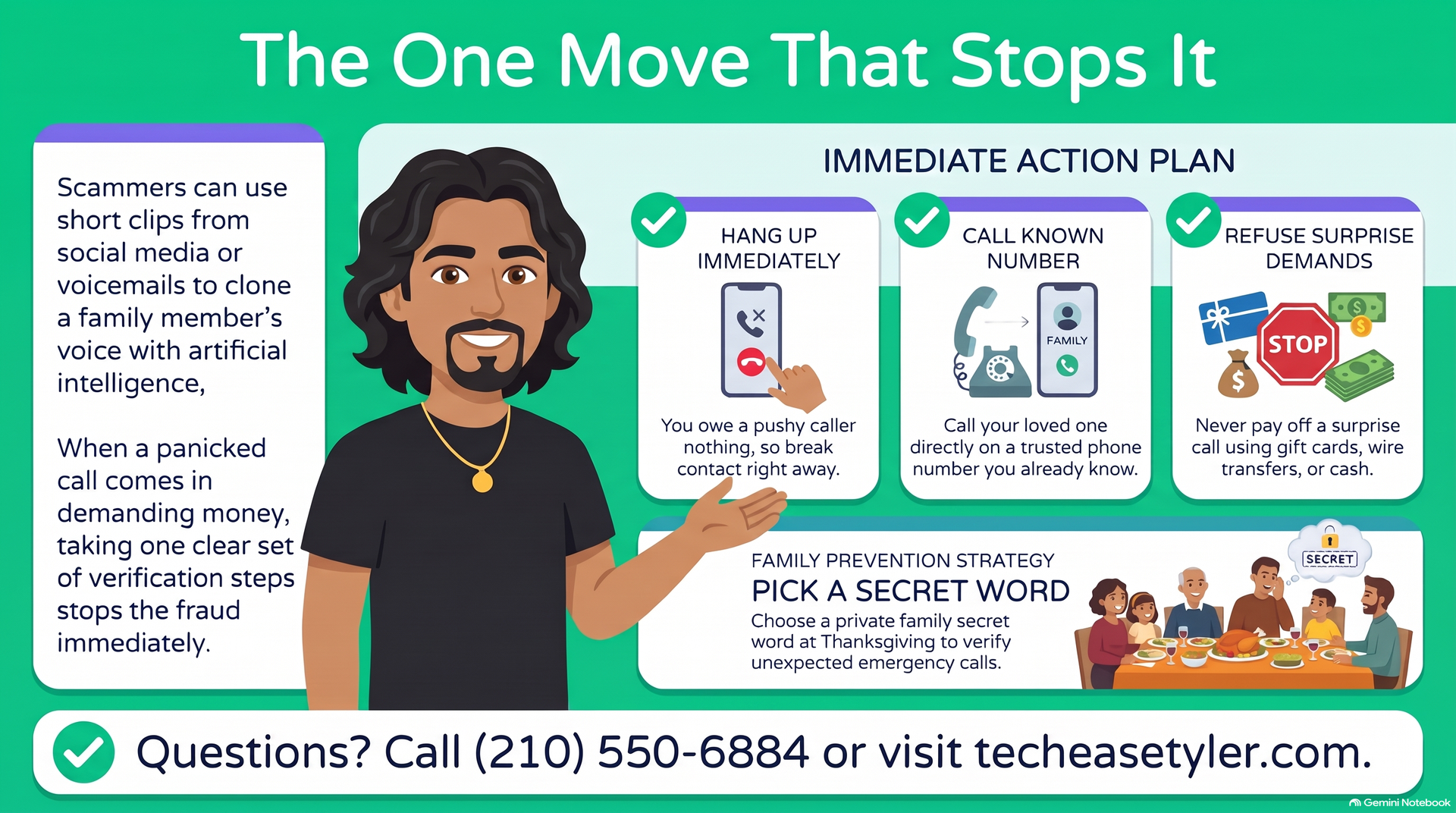
Here is the whole defense, and it is simple. Hang up and call the person back on a number you already know. A fake voice cannot answer your real family member's real phone. The FTC gives this exact advice: do not trust the voice, and reach the person using a number you know is theirs.
It is fine to hang up on anyone asking for money. You owe a pushy caller nothing.
Dial the number you have saved for your loved one. If they do not answer, call another relative who can reach them.
No gift cards, no wires, no crypto, no cash courier. Ever. That is the money leaving for good.
💼 Business owners: the same trick is aimed at you
If you run a business here in East Texas, you are a target too. The same voice-cloning tools are used to fake a call from the boss or a familiar vendor rushing an employee to wire money or buy gift cards before anyone can double-check. It is the same scam wearing a work suit.
The fix is the same. Any money request that arrives by a surprise call gets verified on a known number before a single dollar moves. Tell your team out loud that no real instruction from you will ever punish them for pausing to confirm. If you want a second set of eyes on how your shop handles payments, we help small businesses with this, and you can read our take in our write-up on a local phone scam.
📞 Where to report it and get help
If you got one of these calls, or you already sent money, you are not alone and it is not your fault. Report it. Reporting helps investigators and can sometimes help you recover funds if you act fast.
❓ Quick answers
How do scammers get my family member's voice?
From any recording that is public or easy to grab: a social media video, a voicemail greeting, or a posted clip. A few seconds is enough for the software to copy how they sound.
What if I cannot reach my loved one right away?
Do not send money while you wait. Call another family member who can find them. Silence on their end does not prove the emergency is real.
I already sent money. Is it gone?
Maybe not, if you move quickly. Call your bank or the gift card company right now and ask them to stop the payment, then report it to the FTC. The sooner you call, the better your odds.
God Bless.
Robert
Owner, TechEase
"No jargon, no judgment, just patient help that makes sense."
📞 (210) 550-6884 | Transparent Flat-Rate Pricing | We Come to You