
The photos were real. The dealer name was real. The company taking the money was not.
That is how this one works. A lot of folks around Tyler and the rest of Smith County keep a few acres, a tractor, a zero-turn mower, maybe a hay trailer. Fall is when many of us shop for the next one. And right now, scammers are setting up shop to look exactly like the dealers we already trust.
I want to be clear about something up front. The people this hits are not careless. They are careful buyers who looked at the paperwork, and the paperwork looked right. That is the whole trick.

🚜 What the FTC Is Warning About
According to the FTC's consumer alert, here is how it usually goes:
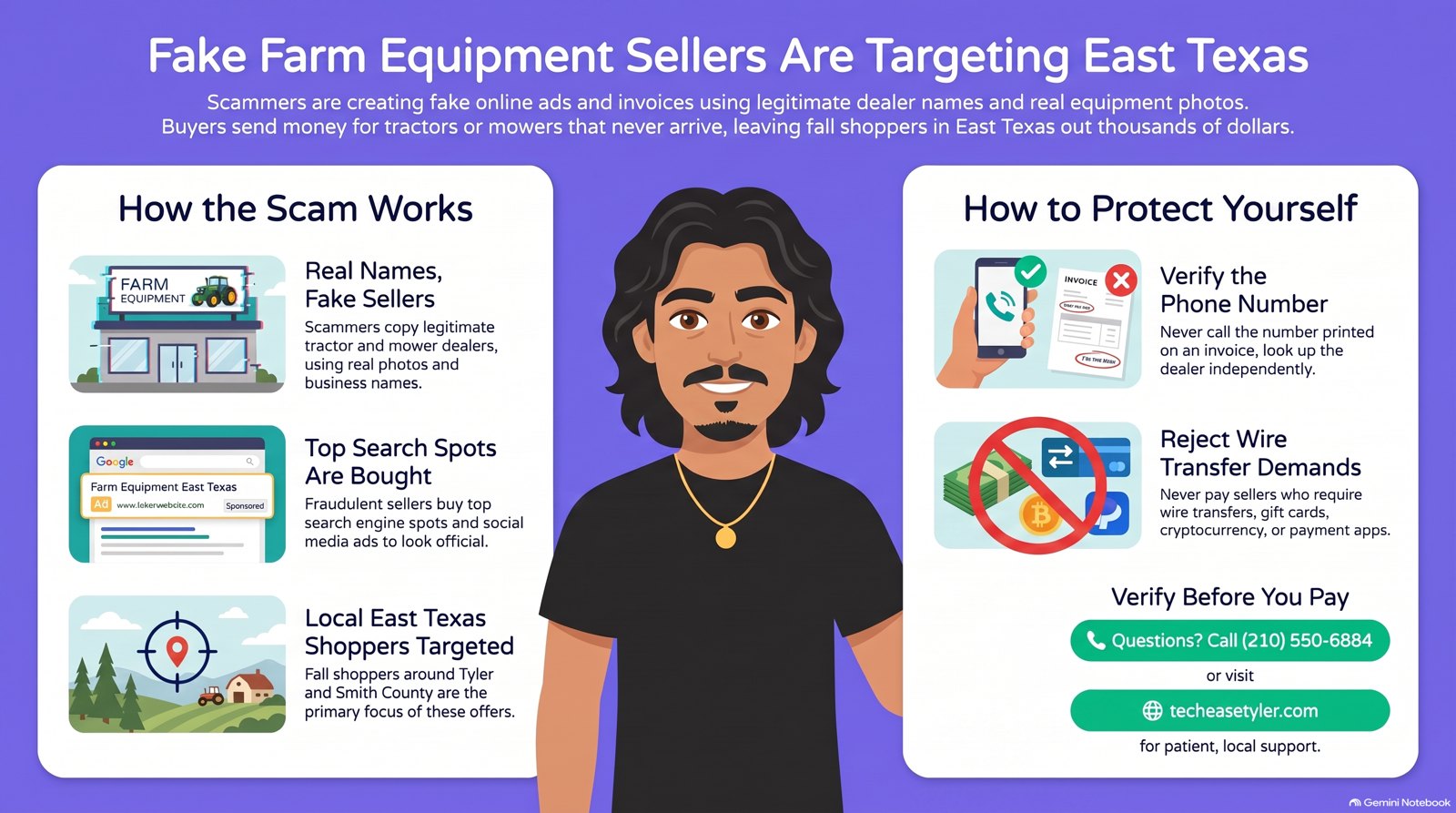
The fake business shows up in an ad on Facebook or another social site, or it pays to sit at the very top of your search results.
They send a purchase agreement and an invoice that look just like what a real dealer would send.
They want thousands of dollars by wire transfer, either as a deposit or as payment in full, with a delivery date set.
The date slips. Then it slips again. There is always an excuse. Then the phone stops being answered at all.
🚩 Warning Signs to Watch For
Any one of these is a reason to stop and check. Two or more together, walk away.
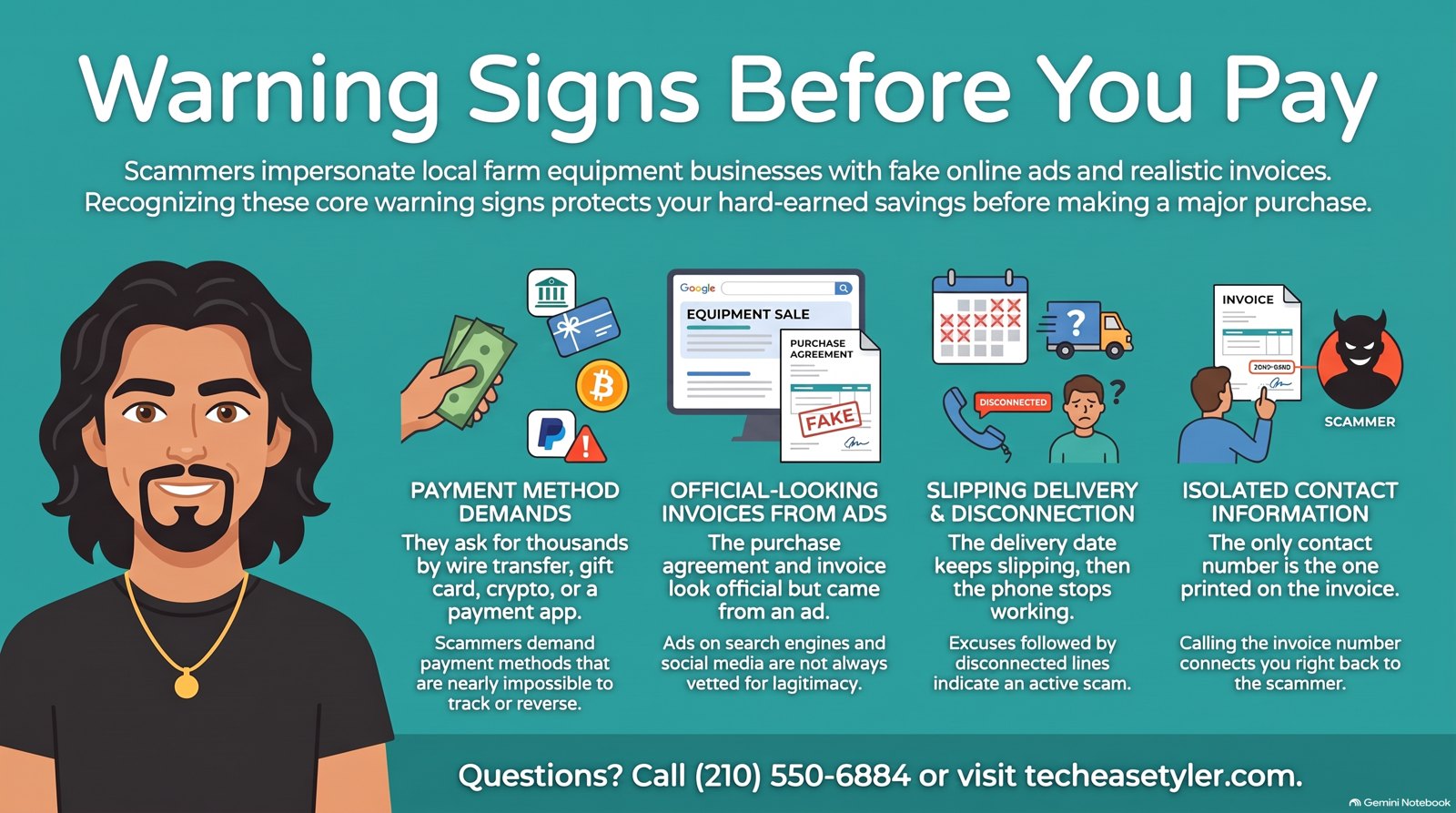
The FTC says to never send money to anyone who says you can only pay this way. Once that money is gone, it is almost impossible to get back.
Social media sites do not always check who is running an ad. And the results marked "Sponsored" at the top of a search page are paid for. A scammer can buy that spot and put their own phone number in it.
If the number is printed on the invoice, in the ad, or in their email, you are calling the scammer back. That proves nothing.
One delay happens. A string of new excuses after you have already paid is the pattern the FTC describes. Do not send more money to "fix" a shipping problem.
✅ Five Things to Do Before You Pay
The first three come straight from the FTC's own advice. The fourth is the one I always add. None of them take more than a few minutes.
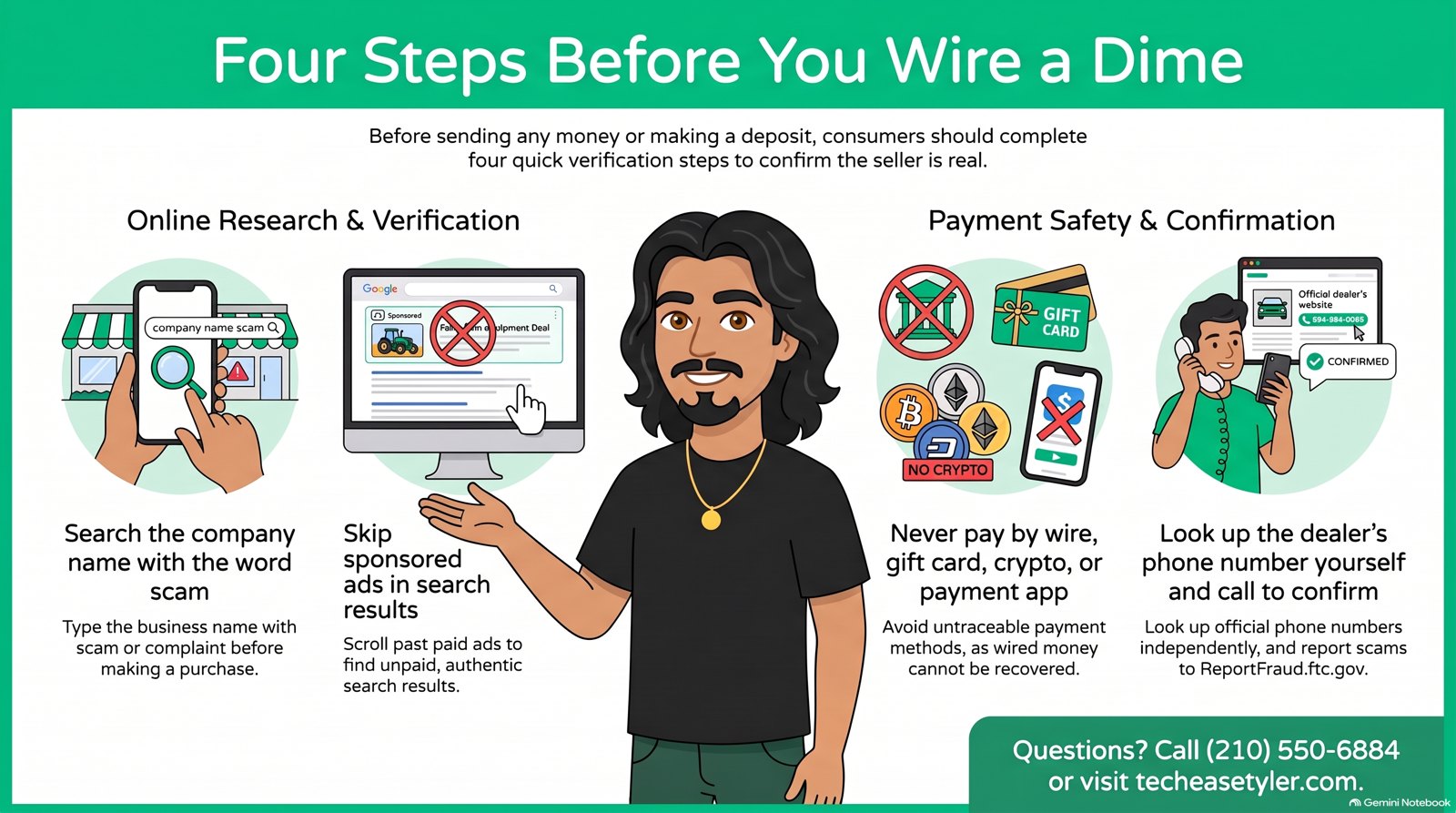
Type the company name into a search with the word "scam" or "complaint" after it. See what other people have run into.
Scroll past the paid ads at the top. Check the business details in the regular, unpaid results underneath.
No wire transfers, gift cards, cryptocurrency, or payment apps for a stranger. A real dealer will take a payment you can dispute.
Look up the dealership's own phone number, from their sign, a past receipt, or a friend who has bought there. Ask them if this sale is really theirs.
Tell the FTC at ReportFraud.ftc.gov, even if you did not lose a penny. Your report helps warn the next person.
💵 Why Scammers Love Wire Transfers
The FTC explains that wiring money is like sending cash. Once it is sent, you usually cannot get it back. Gift cards, cryptocurrency, and payment apps work much the same way. That is exactly why a scammer asks for them, and why an honest seller usually will not insist on them.
We have seen this same playbook before. Scammers pushed Smith County families toward Bitcoin machines in the fake deputy scam, and it is a big reason we wrote about doing away with Bitcoin ATMs. The story changes. The way they want to be paid does not.
Scammers often pretend to be someone you already trust. The FTC has a helpful page on how to avoid imposter scams if you want to read more. And it is a good reminder of something a Dollar General manager here showed us: a neighbor who speaks up at the right moment can save someone a lot of money.
📞 Where to Report It and Get Help
If you have a friend, a neighbor, or a parent who has been shopping for a tractor or a mower this fall, please pass this along. One phone call to the real dealer can save thousands of dollars.
God Bless.
Robert
Owner, TechEase
"No jargon, no judgment, just patient help that makes sense."
📞 (210) 550-6884 | Transparent Flat-Rate Pricing | We Come to You