
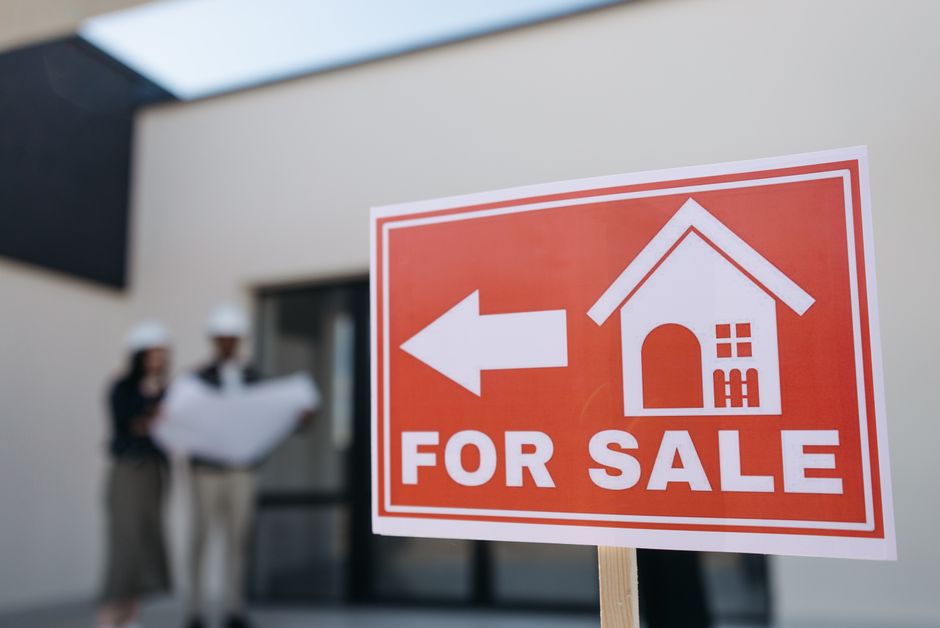
The pictures looked wonderful. Big bright windows, a green lawn, a clean new roof. Then you drive out to see the house, and it is darker, smaller, and a lot more worn than anything in the photos.
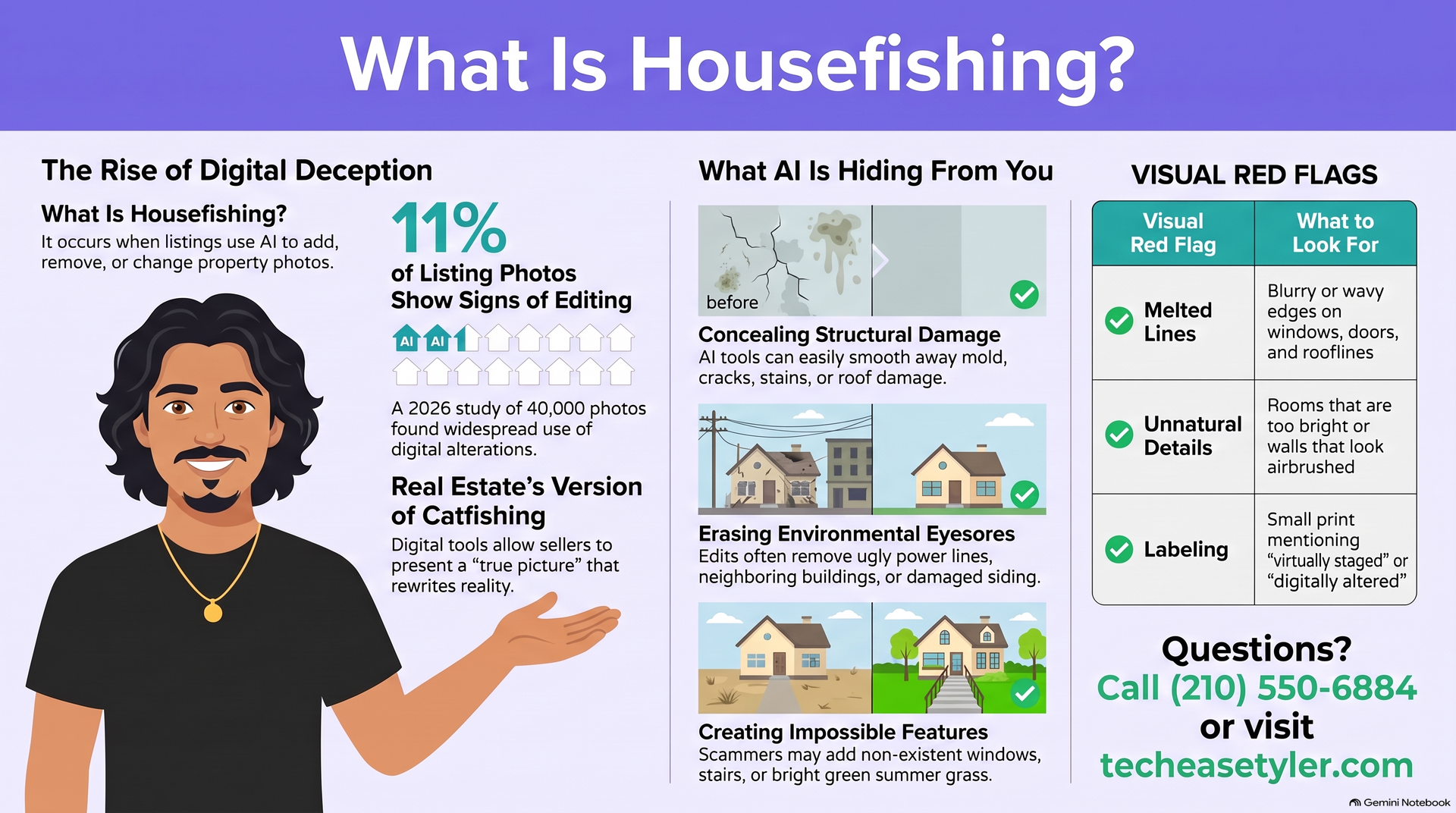
That has a new name now: "housefishing." It happens when a home listing uses computer tools, often called AI, to add, remove, or change things in the photos. Sometimes it is harmless touch up work. Sometimes it hides real problems, like water damage, cracks, or a power line right over the backyard.
Whether you are buying, renting, or helping a parent downsize, here is what to watch for.
🏠 What Is Housefishing?
The word comes from "catfishing," when someone online pretends to be someone they are not. Real Estate News describes housefishing as a listing where the photos give a false picture of the property, so what you see online does not match what you find at the showing.
A study by the real estate company Coraly looked at about 40,000 main listing photos from Zillow, Redfin, Realtor.com and Homes.com in early 2026. As reported by Real Estate News, nearly 11% showed signs of being digitally altered, and most of those changes were to the outside of the home or the yard.
🎨 What These Tools Can Change
Extra windows, brighter lighting, new furniture, even walls or stairs that do not exist in the real room.
Paint over damaged siding, lay down bright green grass, or erase ugly power lines and neighboring buildings.
Mold, cracks, stains, or roof damage can be smoothed away so you never see them online.
In one case covered by Futurism, an edited Kentucky listing even showed the wrong house number.
🚩 How to Spot a Fake Listing Photo
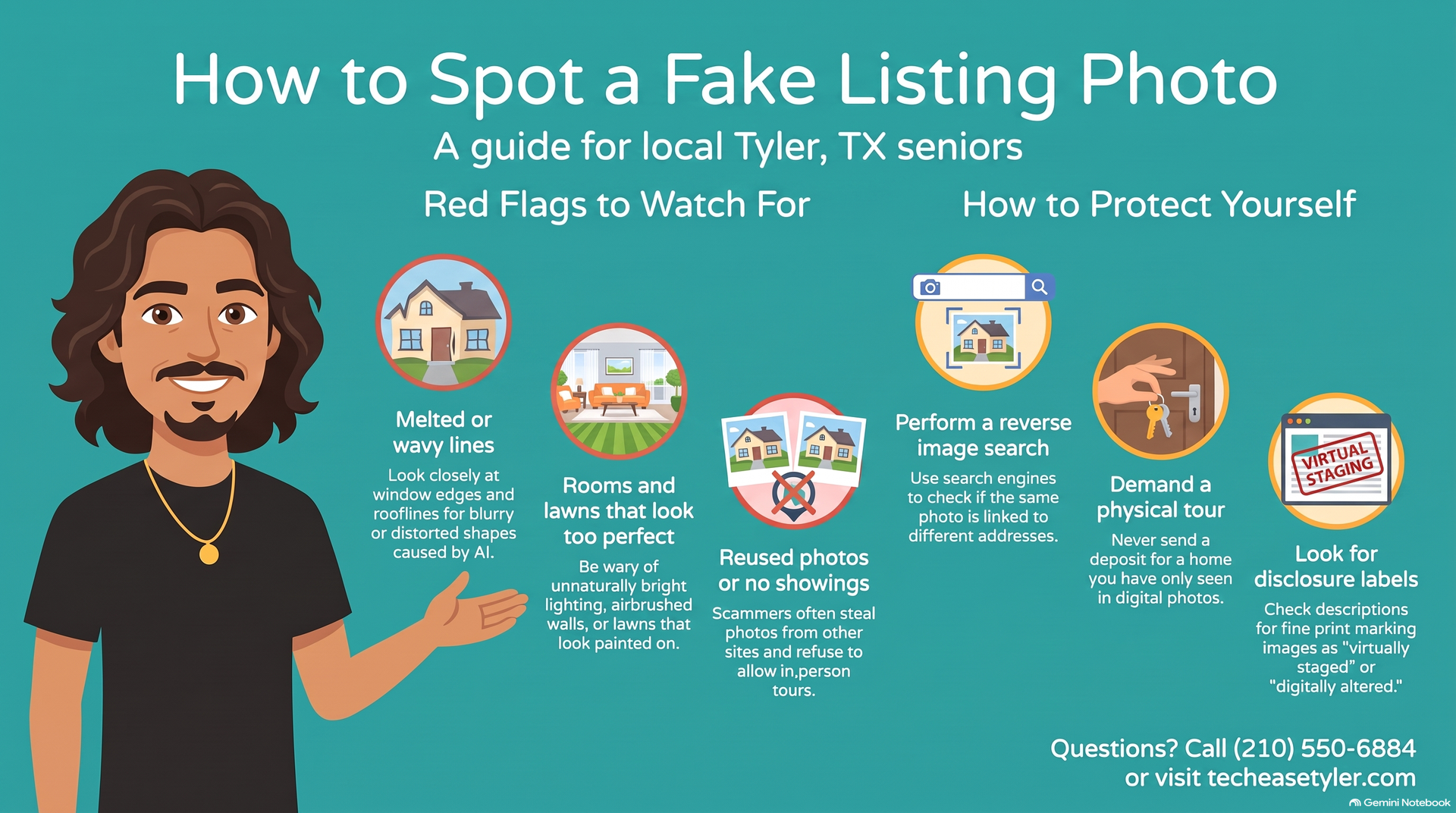
Look closely at the edges of windows, doors, and rooflines. Edited photos often have lines that bend, blur, or melt together.
Unnaturally bright rooms, airbrushed walls, or bright green grass in the middle of a Texas August are warning signs.
The pictures show up on other websites, sometimes for a house in a completely different city.
The seller or landlord cannot meet you or show you inside. The FTC warns this is a classic sign of a rental scam.
They want a deposit right away, by wire transfer, gift card, or cryptocurrency, before you have seen the place.
✅ How to Protect Yourself
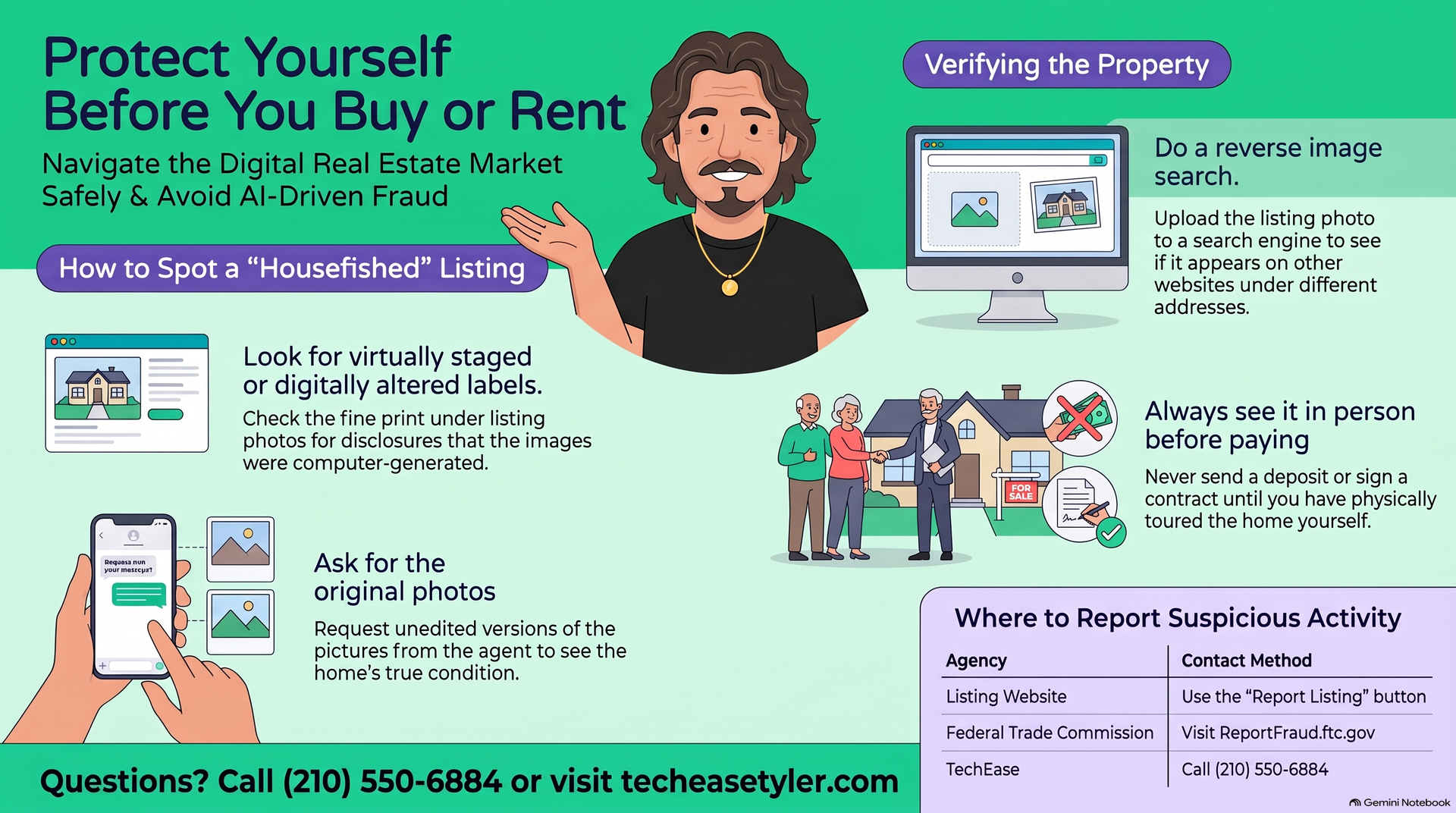
Some listings mark photos as "virtually staged" or "digitally altered." Read the fine print under the pictures.
If a photo looks too good, ask the agent for the unedited version. Real Estate News points out that California now requires agents to disclose altered photos and link to the originals.
Upload the listing photo to a search engine to see where else it appears. First American recommends this to catch reused or stolen photos.
Always tour the home yourself, take your own photos, and get a professional inspection before you commit.
Real estate is a favorite target for crooks right now. If you own property, especially land or a home nobody lives in, please also read about deed fraud and seller impersonation in East Texas. And for the same kind of too good to be true pictures on shopping sites, see fake online stores and social media ads.
📞 Where to Report a Fake Listing
God Bless.
Robert
Owner, TechEase
"No jargon, no judgment, just patient help that makes sense."
📞 (210) 550-6884 | Transparent Flat-Rate Pricing | We Come to You