
Imagine getting a call from your title company asking why you are selling your vacation property in Bullard. Except you never listed it. You never talked to an agent. You did not even know it was for sale. That is exactly what is happening to property owners right here in East Texas, and it is called deed fraud, or seller impersonation fraud.
This one does not start with a scary phone call or a fake deputy at your door. It starts quietly, with a stranger pretending to be you, and it can end with your property sold out from under you before you ever find out.
🔍 What Is Deed Fraud and Seller Impersonation?
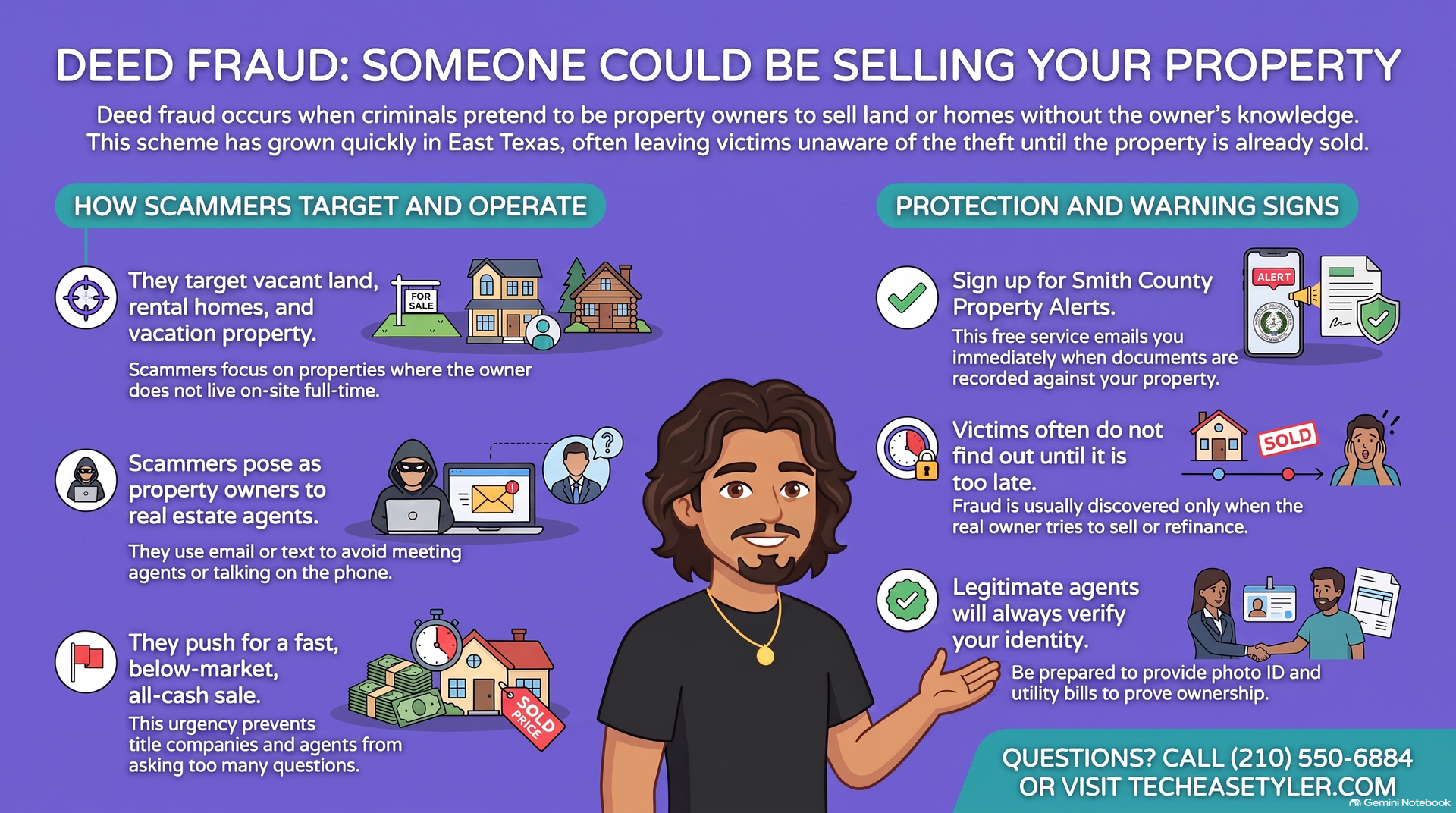
Deed fraud happens when a criminal pretends to be the owner of a piece of property and tries to sell it or borrow against it without the real owner knowing a thing. Seller impersonation is the piece of that puzzle where the scammer contacts a real estate agent directly, claiming to be you, and asks them to list your property for sale.
These criminals go after property they know you are not watching closely. That means vacant land, rental houses, vacation homes, and any property where the tax bill goes to one address but nobody actually lives there day to day.
🕵️ How the Scam Works
The scammer searches public property records for owners who live elsewhere, own vacant land, or hold onto rental and investment property.
Pretending to be the owner, they reach out to a real estate agent by email or text, never asking for a phone call or a meeting in person.
They list the property below market value and push hard for a fast, all-cash sale before anyone has time to ask too many questions.
If the closing goes through, the criminal walks away with the cash and vanishes, leaving the real owner to untangle the mess.
🎯 Who Scammers Target
Not every homeowner is at equal risk. This scam works best on properties the owner is not checking on regularly, which is exactly why East Texans with a second home, a piece of family land passed down for generations, or a rental property need to pay close attention.
🚩 Warning Signs to Watch For
If you are a property owner, or if you know a real estate agent or title company employee, these are the signs the Texas Land Title Association's task force says to watch for:
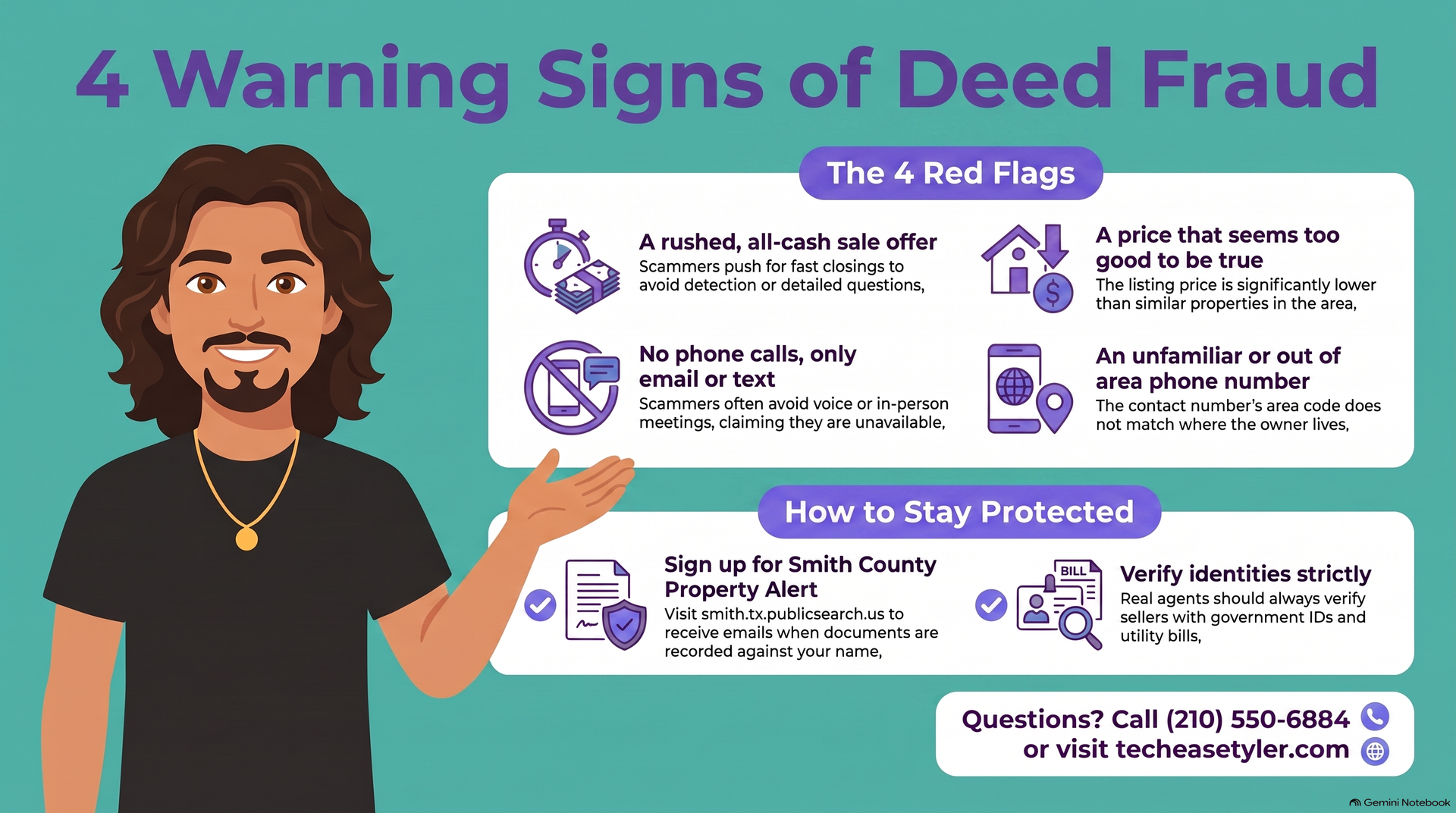
The seller wants to close fast and only wants cash, with no interest in waiting for a normal financed buyer.
The listing price sits noticeably below what similar properties in the area are selling for.
The "seller" only communicates by email or text and always has an excuse to avoid a phone call or an in-person meeting.
The contact number has an area code that does not match where the real owner is known to live.
🛡️ How to Protect Your Property
The good news is that just like the fake deputy scam we wrote about before, deed fraud has clear warning signs, and there are free tools built specifically to catch it early.
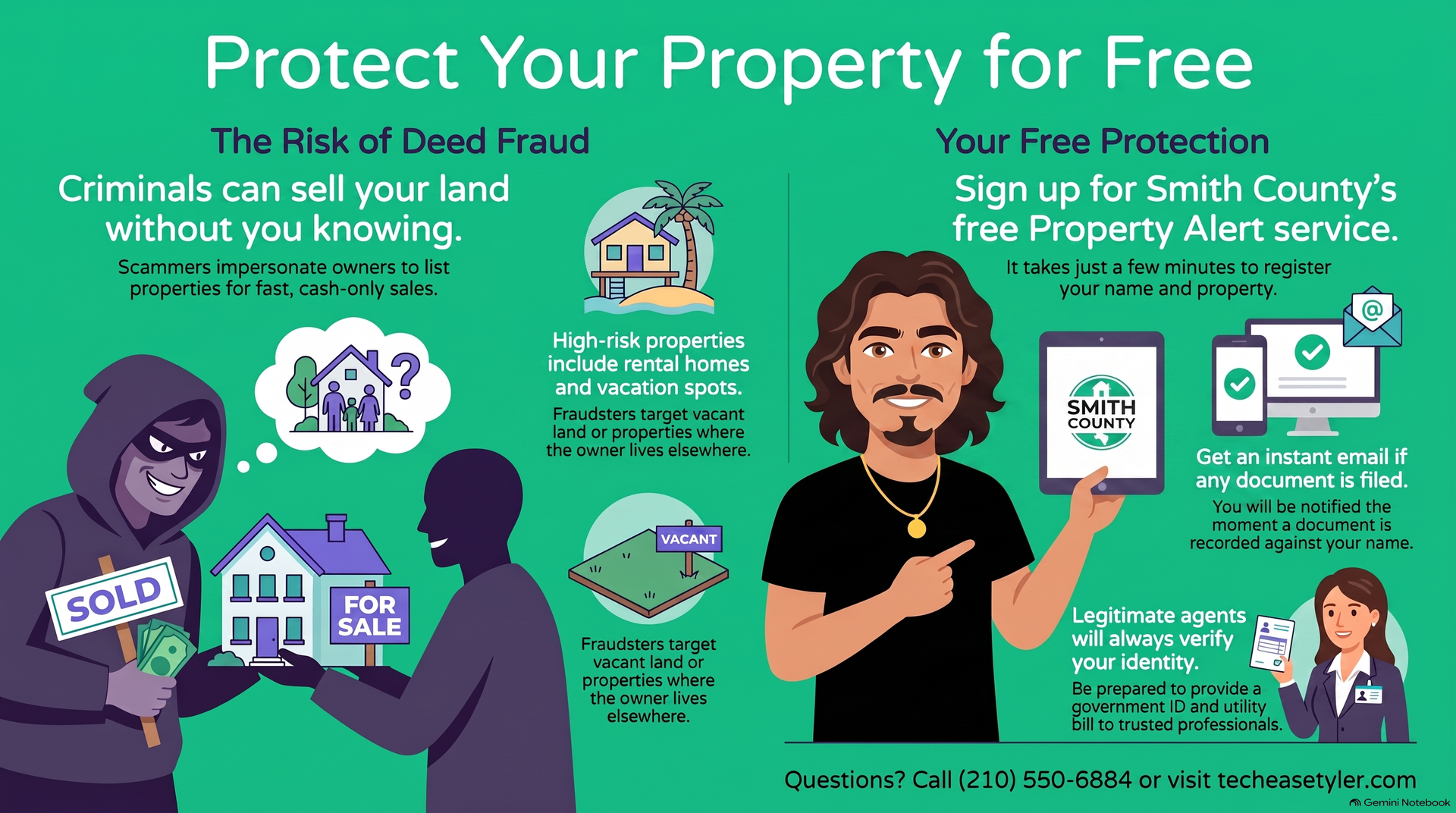
To sign up, visit the Smith County Property Alert page and register your name and any property you own. If you own property in another Texas county, most county clerk offices offer the same kind of free alert service, so it is worth checking there too.
If you are working with a real estate agent to sell a property remotely, a legitimate agent will always want to verify your identity with a government photo ID, a recent utility bill, and questions only the real owner would be able to answer. If an agent skips that step, that is a red flag for them too.
God Bless.
Robert
Owner, TechEase
"No jargon, no judgment, just patient help that makes sense."
📞 (210) 550-6884) | Transparent Flat-Rate Pricing | We Come to You