
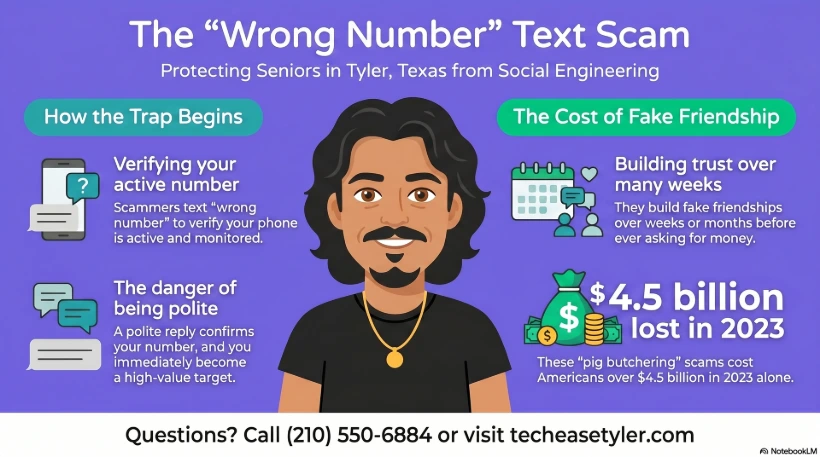
Your phone buzzes. A text from an unknown number reads: "Hi, is this Sarah? Sorry, I think I have the wrong number." You do not know anyone named Sarah, so you text back, "Sorry, wrong number." That simple reply just handed a scammer exactly what they were looking for.
This is the "Sorry, Wrong Number" scam, and it is spreading fast. The Federal Trade Commission and the FBI both track this scam, and the losses can be devastating. People have lost tens of thousands of dollars after what started as a single accidental-looking text.
I help Tyler area families with their technology every week, and I want you to understand how this scam works before it reaches your phone or your family, if it has not already.
📱 Watch the 60-second version
@robertfromtechease
📱 What Is the "Wrong Number" Text Scam?
It starts with a short, friendly message that looks like a genuine mistake. A stranger texts you something like:
"Hey, is this Mark? Thought you were my coworker. Sorry to bother you!"
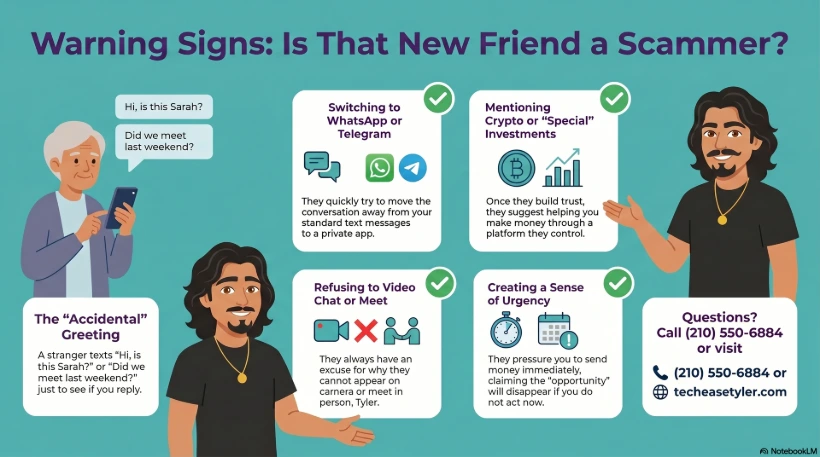
"Did we meet at the event last weekend? I may have the wrong number."
The message feels warm and accidental. But the scammer is not looking for Sarah or Mark. They are checking two things: whether your phone number is active, and whether you are the kind of person who will be polite enough to write back. When you reply, even just "wrong number," you have confirmed both.
This is not a random act. Scammers run this tactic at scale, sending thousands of texts at a time. They are fishing, and a polite reply is the bite they are waiting for.
💰 How It Turns Into a Bigger Scam
After you reply, the scammer does not disappear. They apologize, introduce themselves with a friendly name, and start a real conversation. They will text you every day. They will ask about your family, your life, and how your health is doing. They are genuinely good at this. Patient, warm, and attentive in a way that feels real (It's not).
This slow buildup has a name: "pig butchering." It comes from the farming practice of fattening an animal before slaughter. The scammer "fattens" the relationship over weeks or months, building real trust before they ever ask for a dollar.
At some point, they will mention cryptocurrency or a special investment opportunity. They will say they made great money and want to help you do the same. They will walk you through sending money to a platform they control. The money disappears. The "friend" disappears too.
The FBI's Internet Crime Complaint Center (IC3) reported that investment fraud, much of it pig butchering, cost Americans over $4.5 billion in 2023 alone. It is the highest-loss crime category they track.
🚩 Warning Signs to Watch For
Once you know what to look for, these scams become easier to spot. Here are the biggest warning signs:
After the first text, they will ask you to switch to WhatsApp, Telegram, or another platform. This gets the conversation off your standard messages app and onto something they control more easily.
After building trust, they "casually" mention how well they have done with a special investment. They will offer to show you how. There is no investment. Any money you send is gone immediately.
They always have a reason they cannot appear on camera or meet face to face. That is because they are not who they claim to be. The photos they send are stolen from someone else's social media.
"This opportunity closes tomorrow." "You need to send the funds tonight to lock in your spot." Pressure to act fast is always a sign of a scam. Legitimate investments never work this way.
✅ What to Do If You Get One of These Texts
The good news: protecting yourself is simple once you know what you are dealing with.
Even saying "wrong number" confirms your number is active. Do not respond at all, not even to correct them or tell them to stop texting you.
On iPhone or Android, you can block any number right from the message thread. This stops future texts and calls from that number from reaching you.
Delete the whole conversation so it cannot tempt you or anyone else in the household later.
Forward the scam text to 7726, which spells SPAM on your keypad. This is a free service from the phone carriers. Your report helps block this number for others.
Visit reportfraud.ftc.gov to file a report with the Federal Trade Commission. It takes about two minutes and helps protect others.
🆘 What to Do If You Have Already Responded
If you have been texting with someone who started with a "wrong number" message and something feels off, stop communicating immediately. Do not send any money. Do not share your bank account number, Social Security number, or any passwords. Do not download any apps they recommend.
If money has already been sent, call your bank right away. Every hour matters when it comes to fraud recovery. Then file a complaint with the FBI's Internet Crime Complaint Center at www.ic3.gov. They handle reports like this every single day and have resources specifically for victims of these scams.
📞 Who to Call If You Need Help
📚 More Scam Warnings Worth Reading
Scammers change their tactics constantly. These other posts from our blog are worth bookmarking:
- The Fake Deputy Bitcoin Trap — Scammers pretending to be law enforcement to steal money in Tyler
- Dollar General Manager Helps Stop a $500 Scam on a Veteran — A real East Texas story showing how communities can fight back
God Bless.
Robert
Owner, TechEase
"No jargon, no judgment, just patient help that makes sense."
📞 (210) 550-6884 | Transparent Flat-Rate Pricing | We Come to You