

Every fall, the phone starts ringing. A polite voice says they are calling from Medicare. They say your plan is changing, or you are owed a new card, or you qualify for extra benefits. All they need is to "verify" your Medicare number.
That is the trap. Real Medicare does not call you out of the blue asking for your Medicare number, your bank account, or your card number.
This is the most dependable scam season of the whole year for our older neighbors, and it comes back every October. The good news is that one simple habit stops almost all of it. Let me walk you through it.
📅 Why This Is Happening Right Now
Open Enrollment is the yearly window when people on Medicare can review and change their coverage. It runs from October 15 to December 7. Scammers know that lots of folks are expecting mail and phone calls about Medicare this time of year, so a fake call does not seem strange.
This is a big enough problem that the Federal Trade Commission is holding a free public roundtable on healthcare scams aimed at older adults on September 29, with people from Medicare, the State Health Insurance Assistance Program, and Senior Medicare Patrol on the panel.
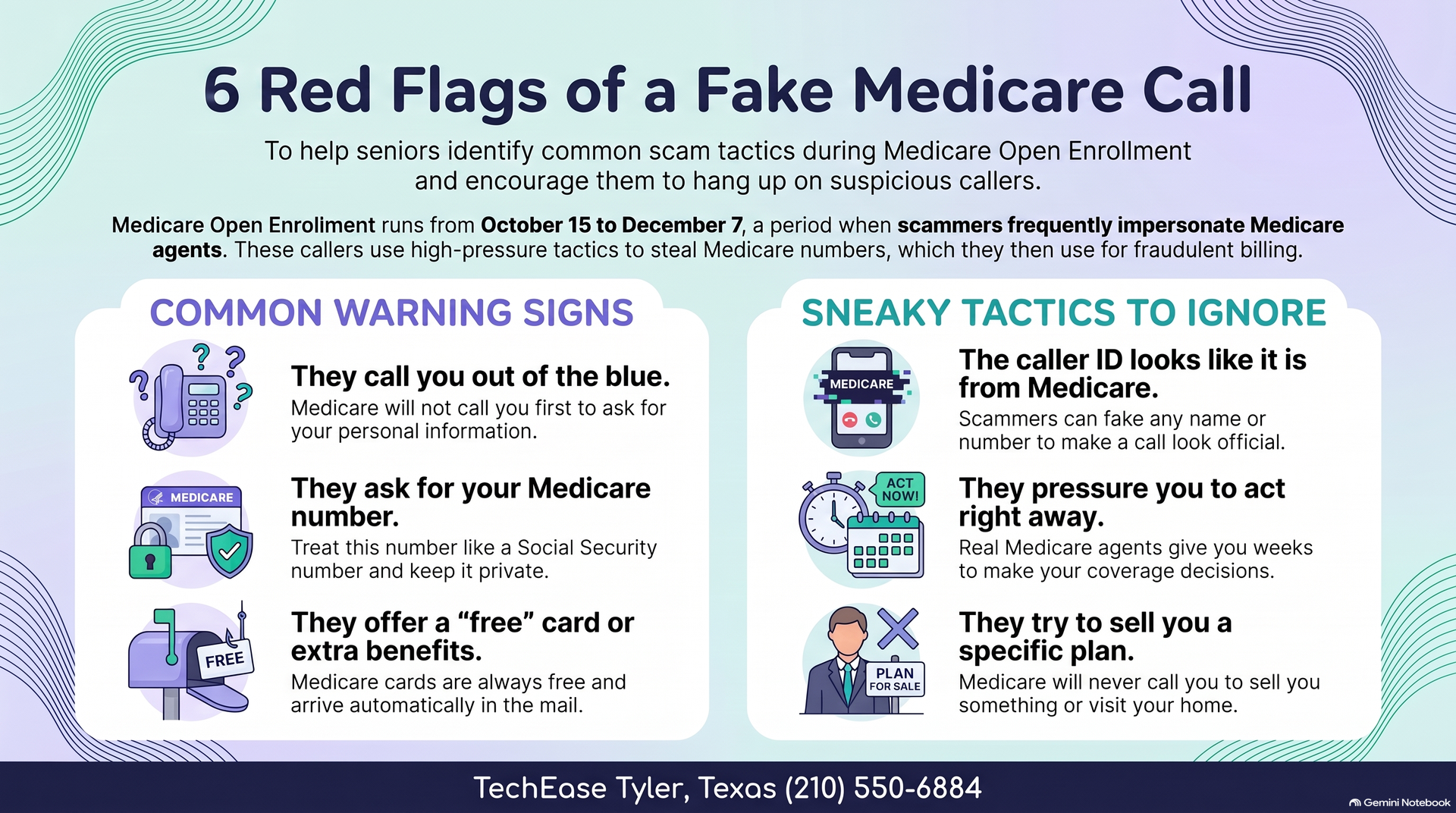
🚩 Red Flags of a Fake Medicare Call
These come straight from the warnings put out by the FTC's Medicare Open Enrollment scam alert and Medicare's own fraud page. If you hear any one of these, it is time to hang up.
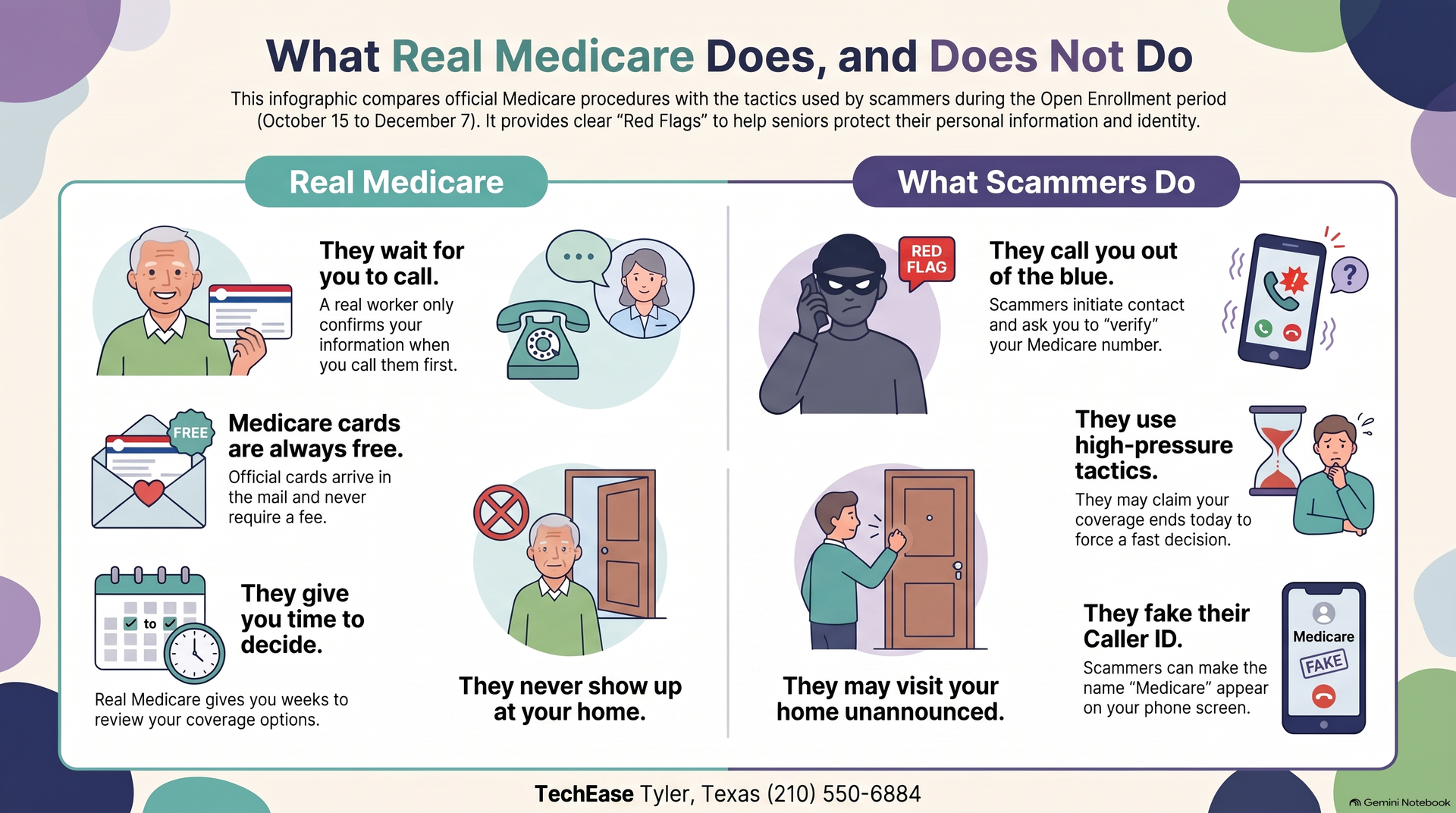
A real Medicare worker only asks you to confirm your information when you are the one who called them. If the call, text, or email came out of nowhere, treat it as a scam.
Medicare cards are free, and they come in the mail on their own. Nobody ever has to pay for one.
Medicare says plainly that it will never call you to sell you anything, and it will never show up at your home.
This one surprises people. Scammers can make any name or number show up on your screen. A call that looks official on caller ID proves nothing.
"Your coverage ends today." "This offer is only good right now." Pressure to act fast is one of the oldest scam tricks there is. Real Medicare gives you weeks to decide.
If some of this sounds familiar, it should. The same pressure tactics show up in the widow scam we wrote about this summer and in why scammers always ask for gift cards. The costume changes. The trick does not.
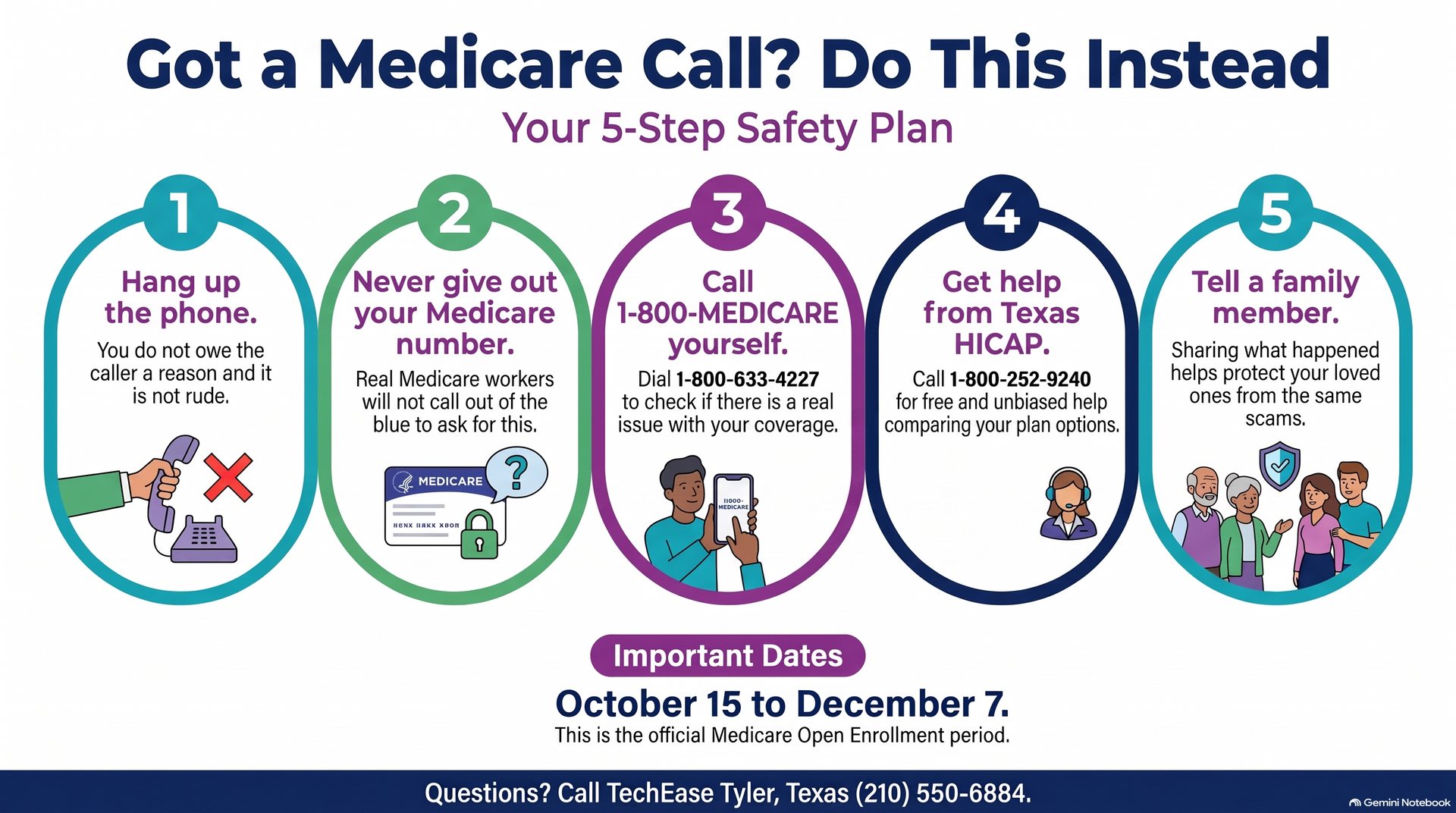
✅ What to Do If "Medicare" Calls
Here is the whole plan. Tape it by the phone if that helps.
You do not owe the caller a reason. It is not rude. It is smart. Do not press any buttons they tell you to press.
Dial 1-800-MEDICARE (1-800-633-4227) from your own phone. If there really is something wrong with your coverage, they will tell you.
Only share your Medicare number with your doctor, your insurance plan, or free counselors you contacted yourself.
Tell 1-800-MEDICARE, and report it at ReportFraud.ftc.gov. Every report helps them warn the next person.
🤝 Where to Get Free, Honest Help Comparing Plans
Open Enrollment is a real chance to make sure your coverage still fits you. You do not need a stranger on the phone for that. Texas has a free program called HICAP, which is our state's version of the State Health Insurance Assistance Program. Their counselors do not sell insurance, so they have nothing to gain from which plan you pick.
To be clear, TechEase does not recommend any particular plan, agent, or company. We just want you to know where the free, neutral help lives.
💬 A Word to the Grown Kids
If your mom or dad is on Medicare, a two-minute talk this week can save them a lot of grief. Tell them the one rule: if "Medicare" calls, hang up and call 1-800-MEDICARE yourself. Send this to your mom before the 15th. It is the kind of thing that is easy to forget until the phone rings.
God Bless.
Robert
Owner, TechEase
"No jargon, no judgment, just patient help that makes sense."
📞 (210) 550-6884 | Transparent Flat-Rate Pricing | We Come to You