
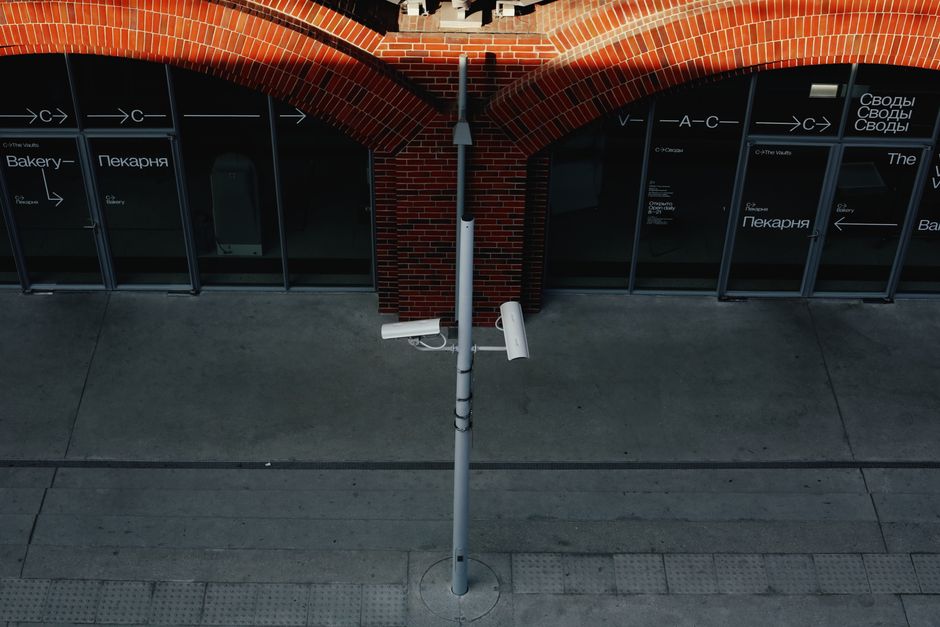
If you have driven around Tyler lately, you may have noticed small white cameras mounted on poles near intersections, in parking lots, and along major roads. They are called Flock Safety cameras, and they scan every license plate that passes by, recording where you went, when you were there, and what direction you were headed.
Local law enforcement says these cameras help solve crimes. And sometimes they do. But a growing number of Tyler residents, including community groups who have filed a petition asking for their removal, say the cameras raise serious questions about privacy, accuracy, and whether the benefits are worth what we are giving up. I want to lay out the facts as clearly and honestly as I can, look at what the evidence actually says, and share some things that concern me as someone who cares about this community.
🔍 What Are Flock Safety Cameras?
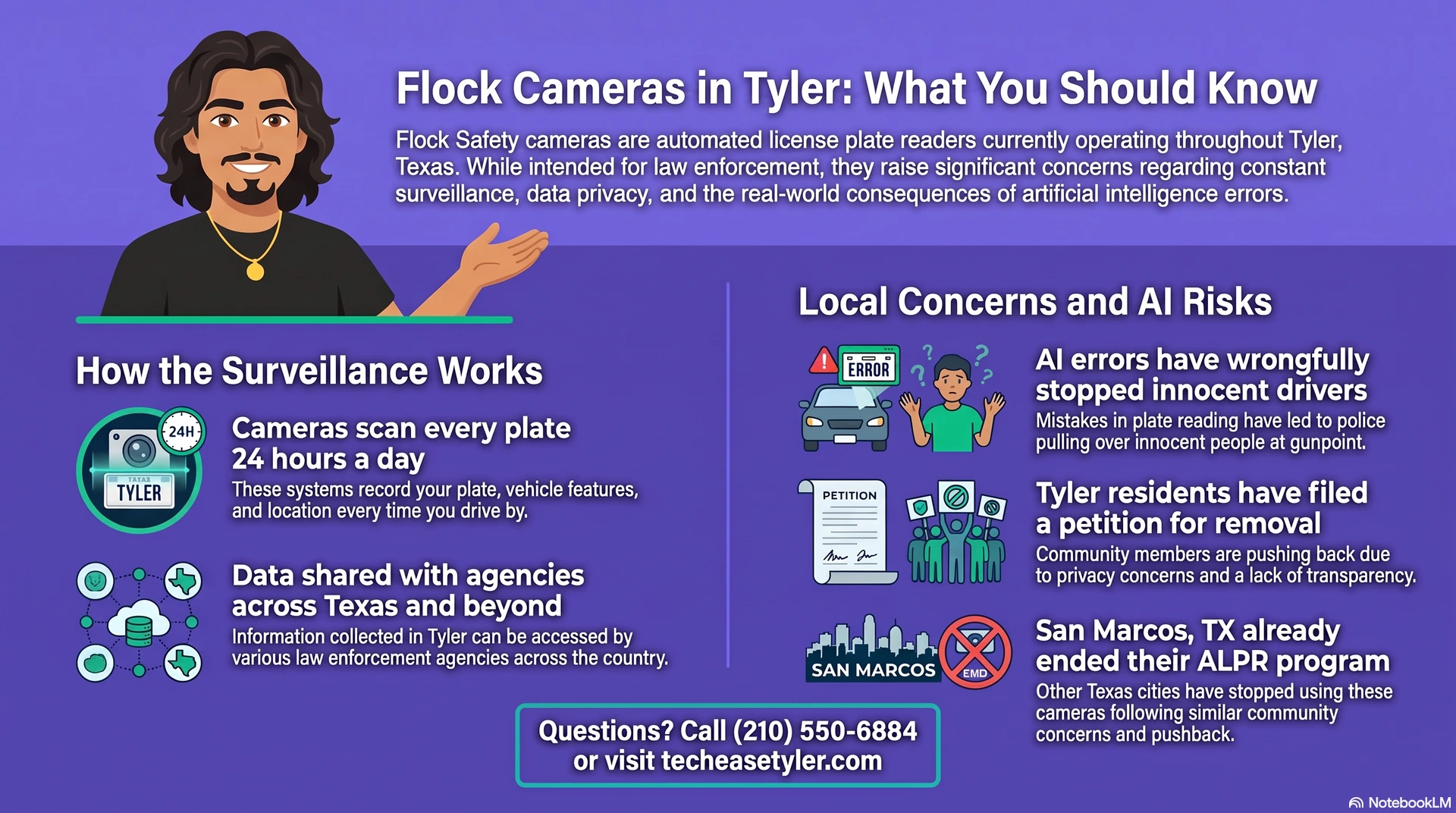
Flock Safety is a private company that makes automated license plate reader (ALPR) cameras. These cameras use artificial intelligence to scan and read every license plate that passes by, 24 hours a day. They also capture the vehicle's make, model, color, and any distinguishing features like roof racks or bumper stickers. The data is stored in Flock's cloud system and shared with law enforcement agencies who subscribe to the service.
Flock cameras are now in more than 5,500 communities across the United States, (possibly an outdated number by the time you read this), according to the company's own figures. Tyler has several installed across the city. The Atlas of Surveillance, a project from the Electronic Frontier Foundation, tracks these deployments across the country.
🔍 The "One Million Crimes Solved" Claim: What Does It Actually Mean?
Flock Safety claims its cameras have helped solve more than one million crimes. That is a big number. But before we accept it at face value, it is worth asking: what counts as "solved," and what kinds of crimes are actually being flagged?
Flock's own data, shared in press releases and not independently verified, counts any time a camera helped lead to an "investigative lead." That is not the same as an arrest. And it is certainly not the same as a conviction. The word "solved" is doing a lot of heavy lifting in that headline number.
When independent researchers and journalists have obtained Flock audit logs and examined what police actually use the system for, they've found a substantial volume of searches tied to low-level matters, expired registrations, traffic offenses, code enforcement, alongside many searches logged with vague or no stated reason. Not the violent crimes the cameras are marketed to solve.
🚩 When the Cameras Get It Wrong: Real Cases of Wrongful Targeting
Automated license plate readers depend on the accuracy of the data they read against. If the database has an error, the camera flags an innocent person. And that has happened. It has happened more than once.
In documented cases across the country, ALPR systems flagged vehicles as stolen when they were not, leading to officers pulling over innocent drivers at gunpoint. In several cases the license plate data in the system was simply wrong: a plate had been cleared from a stolen-vehicle database but the update had not propagated. The driver paid the price.
In at least one well-documented case, an AI camera misread a single character on a man's license plate, flagged his truck as stolen, and he was bitten by a police dog and jailed before the charges were dropped, he later settled with the city. A real person's life was disrupted because of a machine error that no human caught in time.
Flock's network allows law enforcement agencies in different cities and states to share plate data with each other. Your trip to Dallas could show up in a database accessed by agencies you have never heard of. Most drivers have no idea this is happening.

🔍 What Tyler Residents Are Saying
A community petition is circulating in Tyler asking the city to remove the Flock cameras. The groups behind it say their concerns center on privacy, the lack of clear data retention policies, and the fact that the public was not widely consulted before the cameras went up.
Tyler is not the first Texas city to wrestle with this question. The city of San Marcos ended its automated license plate reader program after community pushback, according to the Texas Observer. They raised concerns very similar to what Tyler residents are now voicing.
🔍 AI Is Powerful, But It Is Not Always Right
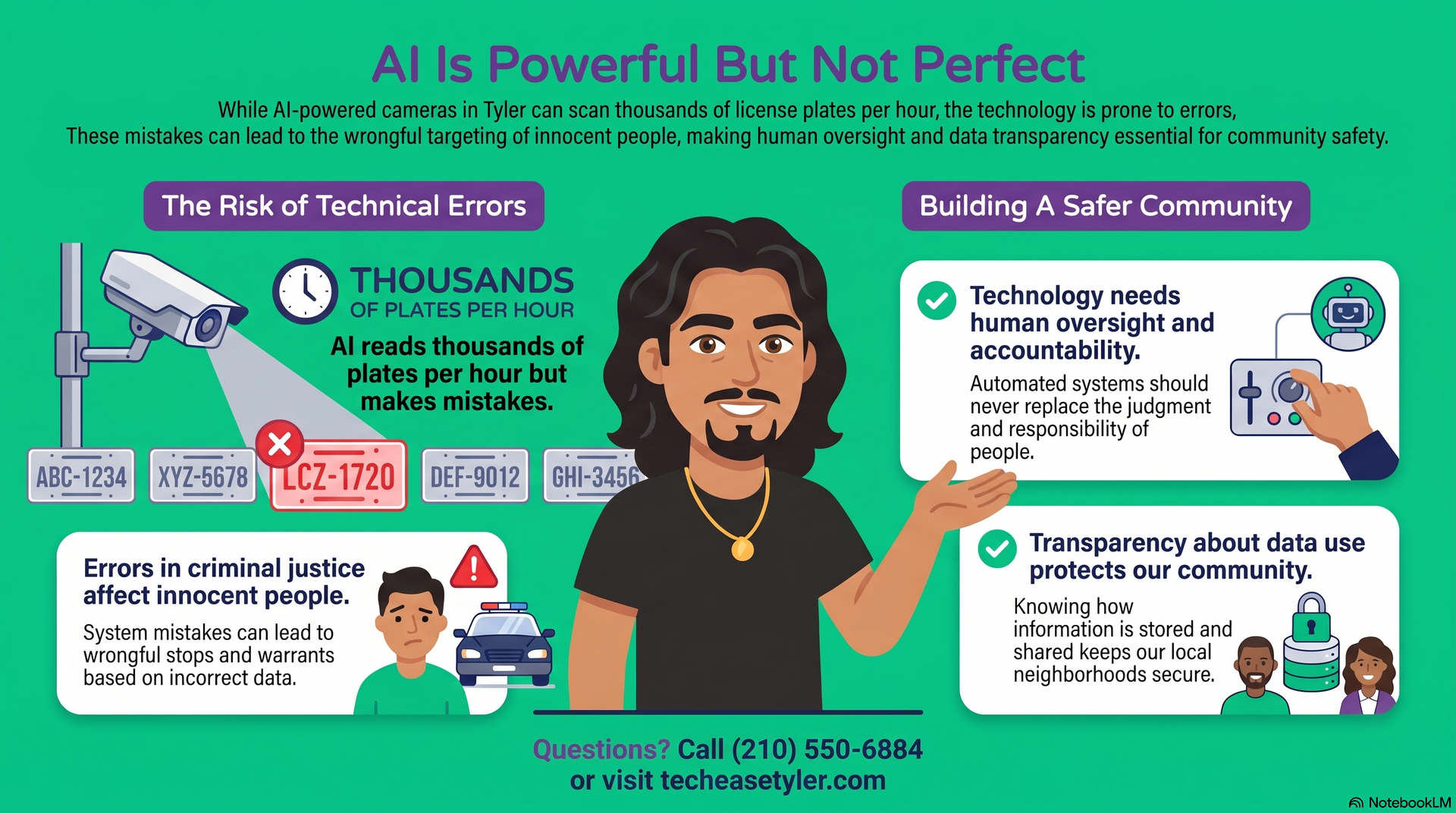
Artificial intelligence can do remarkable things. It can read license plates in a fraction of a second, match them against databases, and send an alert to a police car before the vehicle even reaches the next block. That speed is impressive.
But AI is not perfect. It makes mistakes. And when an AI makes a mistake in a criminal justice context, a real person, often an innocent one, pays the price. AI systems also reflect the data they are trained on. If that data has gaps, errors, or biases, the system will produce gaps, errors, and biased results, faster than any human could catch them.
I am not saying AI is bad. I am saying that any technology this powerful needs strong human oversight, clear accountability when it goes wrong, and real transparency about what it is doing with our data. Right now, in many cities, those guardrails are not fully in place.
✅ What You Can Do
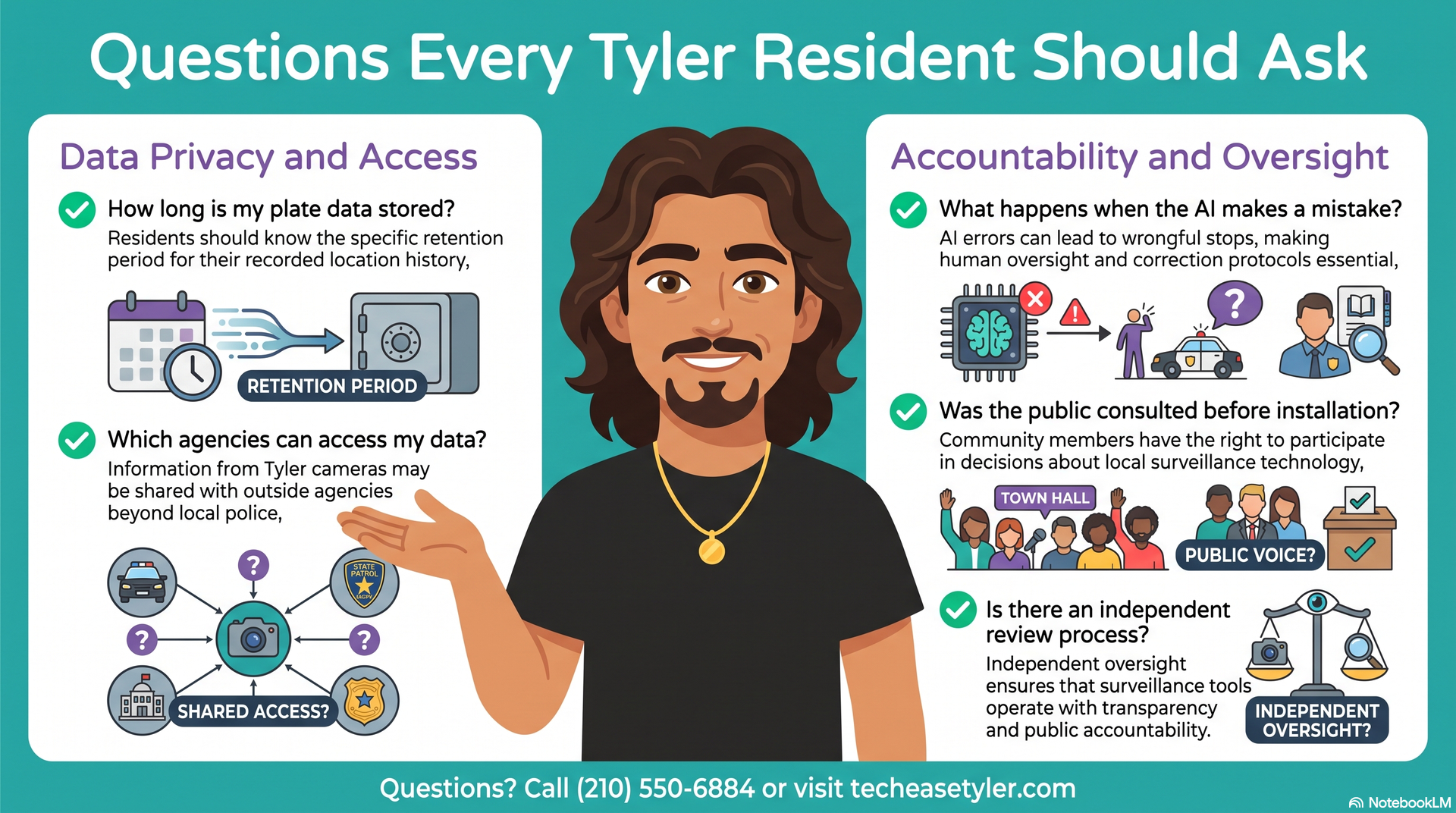
Look up where Flock cameras are in Tyler using the Atlas of Surveillance. Understanding what is out there is the first step.
City Council meetings are public. Attend one and ask your city representatives what the data retention policy is, who can access the data, and whether there is an independent review process when errors occur.
If you are ever stopped because of a license plate flag you believe is in error, you have the right to remain calm, ask what the reason for the stop is, and contact an attorney. Wrongful stops should always be documented.
Community conversations are how policy changes happen. Share this post. Ask your neighbors what they think. Reasonable people can disagree about these tradeoffs, but the conversation needs to happen out in the open.
God Bless.
Robert
Owner, TechEase
"No jargon, no judgment, just patient help that makes sense."
📞 (210) 550-6884 | Transparent Flat-Rate Pricing | We Come to You