
By Robert Richardson, TechEase Tyler | July 10, 2026

Twenty-six residents spoke against the permit. Five spoke in favor, including two representatives of the developer. The city's own planning director recommended denial because the project is inconsistent with the Tyler Tomorrow Comprehensive Plan and the Future Land Use Map. That should be the end of the story. It is not. The applicant's attorney signaled at the hearing that the company may keep pursuing the project.
So before this lands in front of our council members, let's do what the pitch deck could never do. Let's put every promised benefit next to its real cost, with sources, and see which side of the ledger is heavier. Spoiler Alert: it is not even close.
📱 Watch the 60-second version
@robertfromtechease Tyler's P&Z just denied the West Erwin bitcoin mine 5-2. But they can appeal to City Council. So let's do the math on all 5 "benefits" they pitched. Full sourced breakdown on techeasetyler.com #Tyler #TylerTX #EastTexas #bitcoinmining #datacenter ♬ Quiet vlog fashionable chill out(1501557) - Yu Yaguchi
🔍 First, Let's Define Our Terms
A scam does not have to be illegal. The most durable ones never are.
Hold that definition in your head for me. Now let's walk through the five benefits that were pitched to Tyler.
💼 Claim 1: "7 to 10 High-Paying Jobs"
The developers told Tyler the facility would create 7 to 10 full-time jobs paying $25 to $45 an hour, with one to two employees on site at any time.
Take those numbers at face value and think about what the work actually is. This is not a research campus. The proposal was eight 40-foot shipping containers of standard ASIC mining hardware next to an electrical substation. ASIC fleets run stripped-down firmware and are monitored remotely. The physical work on site is swapping failed hash boards, flashing network configs, and replacing fans. This is the work the average tech geek does as a hobby, not the "engineering" experience the pitch implies.
Specialized operators also tend to staff sites with their own pre-vetted deployment teams who already know the company's cluster management stack. Even granting every job to a local hire, the arithmetic is stark: a continuous 12 megawatt draw, roughly the load of thousands of homes, in exchange for one to two people standing in a container yard per shift. As Tyler resident Phillip Olivares put it at the hearing:
"We have to consider the overall benefit to our community with this just being seven to 10 jobs when you compare the potential impacts."
💰 Claim 2: "$35,000 to $45,000 a Month in Local Taxes"
This figure came from the developers themselves. It was never independently verified by the city. Call it $480,000 a year at the midpoint and assume it is accurate.
Property tax revenue is a function of property values. The question the commission had to answer, in board member Christina Davis's words, was whether the use would have:
"minimal with little to no adverse impact."
The planning department's answer was no:
"The site proximity to existing commons and operational characteristics in use have not demonstrated that it can happen without adversely affecting neighboring properties," said Kyle Kingma, Tyler's director of planning.
Here is the math nobody put on a slide. The taxable value of homes and businesses within a half mile of West Erwin and North Ross is many tens of millions of dollars. If an open-air industrial container yard shaves even a low single-digit percentage off surrounding valuations, the city's tax base loses more than the facility contributes. And that is before counting the opportunity cost: 1.8 acres near downtown permanently locked away from the offices, shops, and housing that the Tyler Tomorrow plan actually calls for, uses that would generate sales tax, payroll, and foot traffic for decades.
🏛️ Claim 3: "We're Not Asking for Any Subsidies"
This was a centerpiece of the pitch: no tax abatements, no variances, no special incentives. It sounds like corporate citizenship. It is actually the most revealing claim of the five.
They do not need a local subsidy, because the site sits in a federally designated Opportunity Zone, as reported by the Tyler Morning Telegraph. Here is how that program works, straight from the IRS and the tax code.
An investor who sells stock or real estate and owes federal capital gains tax can roll those gains into a Qualified Opportunity Fund that invests in an Opportunity Zone property, like a 1947 auto building in Tyler. The original tax bill is deferred. And if they hold the investment ten years or more, all NEW appreciation generated by that investment is permanently free of federal tax. To be precise: the original deferred gain still comes due, but every dollar of growth on top of it can escape federal tax entirely.
Research institutions across the political spectrum have criticized how this program works in practice. Brookings found Opportunity Zone investments disproportionately benefit wealthy investors and often subsidize projects that would have happened anyway. The Tax Foundation calls the program "ineffective and poorly targeted" for the low-income residents it was meant to help. The Urban Institute found Opportunity Zone money concentrates in areas that were already growing.
🎓 Claim 4: "Educational Partnerships and Internships"
The pitch included internships for local engineering and tech students. As someone who has spent his career in exactly this kind of hardware work, let me translate what an "internship" at an ASIC mining site is: swapping mass-produced control boards, cleaning filters, and watching dashboards. There is no custom development, no systems engineering, no software stack a student could put on a resume with a straight face.
A student who builds a home lab, documents the journey, and contributes to open-source projects on GitHub will build more real credibility for free. Pitching routine physical maintenance as an educational partnership to UT Tyler and TJC is a well-worn corporate playbook move to source low-cost labor, and our institutions deserve better than to be a line item in someone's community-relations slide.
⚡ Claim 5: "$500,000 a Year in Electricity Spending"
The developers presented their power bill as a community benefit. This one deserves the closest look, because in Texas, the power bill IS the business model. Making this the most absolutely enraging part of this pitch.
Bitcoin miners in ERCOT territory make an enormous share of their money not by mining, but by participating in demand-response programs. They lock in cheap power contracts, and when the grid strains in summer, ERCOT pays them premiums to shut down. This is not a theory or something that "might" happen. In August 2023, Riot Platforms earned $31.7 million in a single month in power and demand-response credits for curtailing operations during the heat wave, while mining only about $8.9 million worth of bitcoin in the same month. Being paid to sit idle earned more than triple what mining did, or ever could have.
Who funds those premiums and the grid strain behind them? Everyone else. A Wood Mackenzie analysis estimated crypto mining has raised electricity costs for non-mining Texans by roughly $1.8 billion per year, about 4.7 percent. Peer-reviewed work by economists at UC Berkeley and Chicago Booth found that when crypto mining moves into a community, local households and small businesses pay measurably higher power bills; in upstate New York the added cost was about $204 million a year for households and $92 million for small businesses.
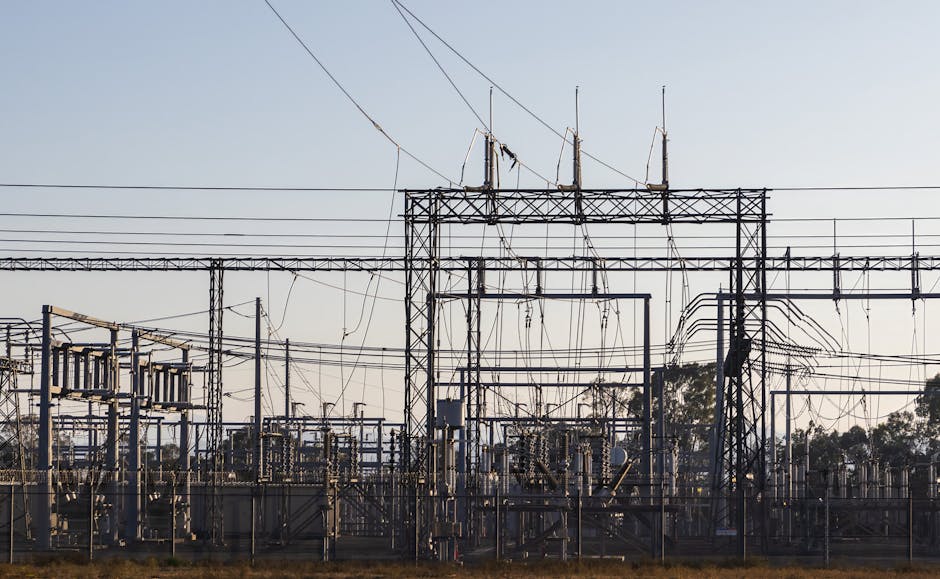
Locally, parking a continuous 12 MW baseload on the West Erwin substation adds congestion to that exact node, and grid management costs are passed to everyone on it through delivery charges.

🧩 The Pattern
None of this is improvised. The Houston-based property firm behind the site, led by president Ivan Pinney, specializes in acquiring industrial properties next to ERCOT substations and has assembled sites across Texas: Monahans, George West, Lolita, and two sites in Matagorda County, in addition to Tyler. The firm closed on the Erwin Street property in August 2024, before the community had any say. In Matagorda County, residents organized their own opposition group and hosted a "Cost of Data Centers" forum in June 2026.
This is a repeatable land-and-power play: acquire near a substation, pitch jobs and taxes, cite an acoustic study, and let the Opportunity Zone do the heavy lifting for investors. It is legal. It is also, by the definition we started with, exactly what it looks like.
And notably, the engineering partner presenting technical assurances at our hearings, Vulcan Core, does not currently maintain an active public website (that I could find) , for us to make any judgment as to who other than their track record. Judge for yourself what that says about a firm asking for a decades-long industrial footprint in our downtown.
✅ What the Commission Got Right, and What Council Must Do
The Planning and Zoning Commission did the math. The proposal failed the city's own standards: inconsistent with the Future Land Use Map, inconsistent with the Tyler Tomorrow Comprehensive Plan, and not demonstrated to avoid harm to neighboring properties.
If the council hears an appeal, the question is simple. Weigh the developers' own best-case numbers, a handful of jobs and their unverified $480K a year, against the documented costs: pressure on surrounding property values, decades of foregone development on prime land, grid congestion costs socialized onto every Tyler ratepayer, and a federal tax benefit that flows entirely out of town.
Tyler is not against growth. Tyler is against bad trades. If the community wants that corner of West Erwin to generate real value, let's put it to the neighborhood and bring the council ideas that fit the Tyler Tomorrow plan: uses that hire our people, serve our community's needs, and grow our tax base instead of borrowing against it.
The commission held the line 5 to 2. Now it is the council's turn.
God Bless.
Robert
Owner, TechEase
"No jargon, no judgment, just patient help that makes sense."
📞 (210) 550-6884 | Transparent Flat-Rate Pricing | We Come to You
This article is community information, not legal or financial advice. Each source is linked above and listed below so you can verify every claim yourself.